
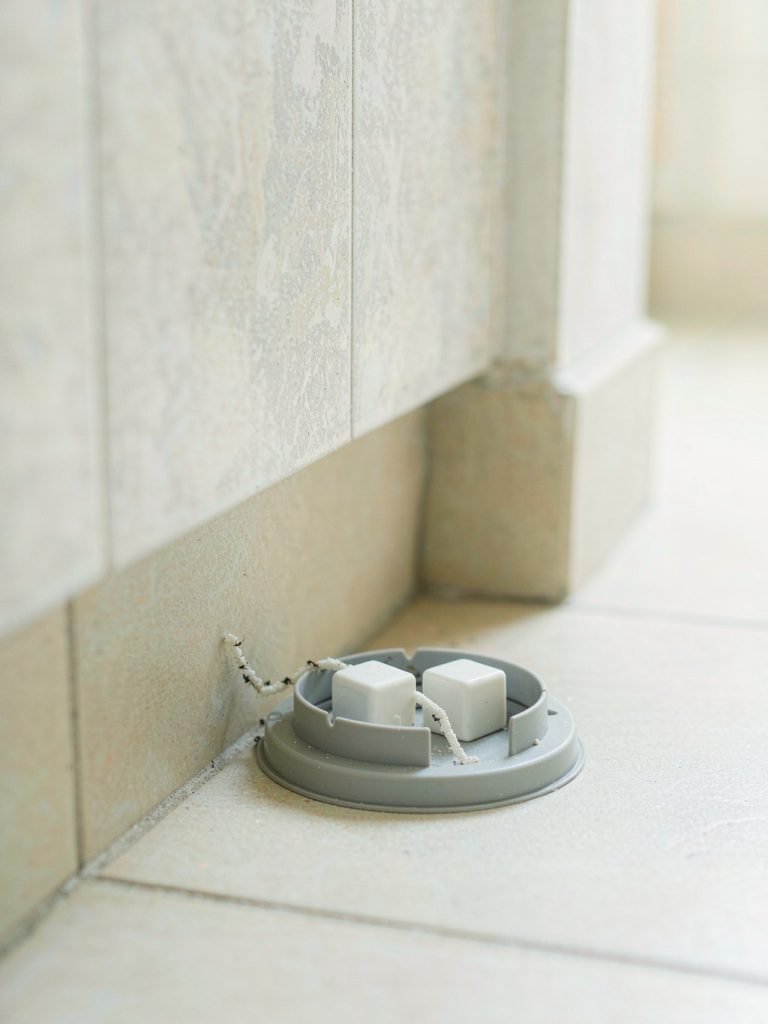
You put down bait. The trail thinned. On day three the ants are back, walking around the station like it is furniture. Nothing changed in the product. What changed is the colony’s appetite, and where the bait was sitting.
Bait is a food, not a poison
Ants collect bait the way they collect crumbs: by preference. A colony feeding larvae wants protein. A colony topping up energy wants sugar. A colony under drought stress wants water. The same gel can be irresistible on Monday and ignored on Thursday because the brood ratio shifted.
That is why a baiting programme uses at least two matrices — one protein, one sugar — and switches when acceptance drops.
The four common failures
- Too much bait in one place. A puddle overwhelms the trail and gets buried or avoided. Pea-sized stations, many of them, work better.
- Bait next to a cleaned surface. Ants follow chemical trails. Wiping the trail and leaving bait beside it removes the invitation.
- Competing food. A full pet bowl, a compost bin, a sticky jar. The colony eats what is easiest.
- Repellent active ingredients. If ants die at the station instead of carrying bait home, the formulation is repellent and the colony never gets a dose.
How to place it
Put stations within 10 cm of the trail, not on it. Anchor them so they do not slide, and keep them out of direct sun; heat degrades the matrix and dries it into something ants walk past. Outdoors, place them at the base of the wall where the trail enters the building, not in the middle of the patio.
Do not kill the foragers you see feeding. They are the delivery service. The instinct to spray a crawling ant is the single most common reason a baiting job fails.
How long it takes
Argentine and pharaoh ants: two to six weeks. Carpenter ants: three to eight weeks, and the nest may be in a wall void or a tree outside. Fire ants: 48 hours for the mound to collapse, but re-invasion from neighbouring mounds is normal.
Expect the trail to increase for the first 48 hours. More workers are recruited to a rich food source. That is a good sign, not a failure.
When to stop baiting
Stop when a one-minute count at the trail falls below roughly one tenth of the starting number, and stays there for a week. Then seal the entry points — utility penetrations, window frames, the gap under a door — so the next colony has to work harder.