
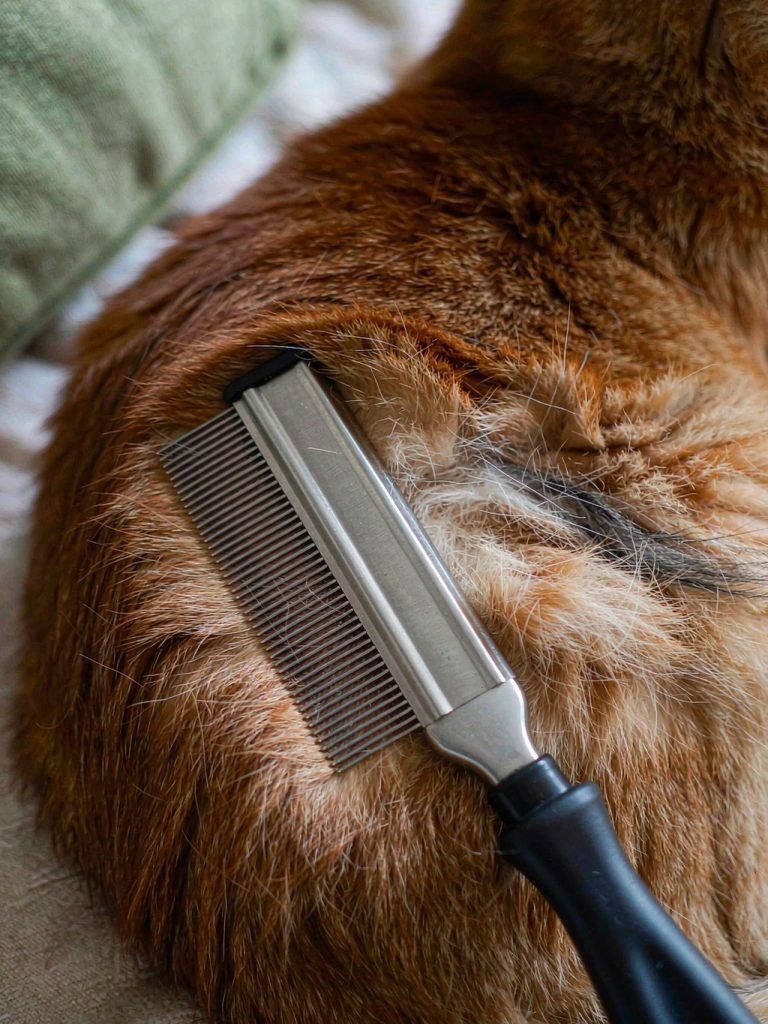
A flea infestation is not a pet problem with a house attached. It is a house problem with a pet attached. At any moment, roughly 5% of the fleas in an infested home are adults on the animal. The other 95% are eggs, larvae and pupae in the carpet, the sofa and the gaps between floorboards.
The four stages
An adult female lays 20–50 eggs a day, and the eggs fall off the host within hours. Eggs hatch in two to fourteen days depending on temperature and humidity. Larvae, blind and legless, burrow into carpet fibres and feed on flea dirt — dried blood in the adult’s feces.
After three larval instars the larva spins a cocoon and becomes a pupa. This is the stage that defeats most treatments. The cocoon is sticky, covered in debris, and resistant to insecticides. A pupa can wait months for the right signal: warmth, vibration, rising carbon dioxide.
That signal is often the family returning from holiday. The fleas emerge all at once, and the house looks worse after two weeks empty than before.
Why vacuuming matters more than spraying
Vacuuming does three things at once: it removes eggs and larvae, it lifts the debris that protects pupae, and the vibration triggers emergence so the adults are exposed to treatment. Vacuum every day for two weeks, and empty the canister outside each time.
Wash pet bedding at 60 °C. Steam-clean carpets and upholstery if you can; heat kills every stage, including pupae.
Treat the animal and the house together
- On the pet. A vet-recommended adulticide, applied on the schedule on the label. Do not skip a dose because the house looks clear.
- On the floor. An insect growth regulator stops larvae from becoming adults. It does not kill adult fleas, so it is always paired with an adulticide.
- In the cracks. Skirting-board gaps and floorboard seams hold larvae out of reach of a vacuum. A residual spray or dust there closes the gap.
- Outside. Shaded, damp spots where pets rest — under the porch, along the fence line — can hold larvae. Keep them dry and clear.
The three-week rule
Expect to see adults for up to three weeks after treatment, because pupae keep emerging. Judge the result at day 21, not day 3. If adults are still appearing after a month, the source is likely a second animal — a cat that visits, a neighbour’s dog — or a treated pet that is being re-exposed outdoors.