
Rodenticide is the most common answer to a rodent problem and the least durable one. It removes individuals. It does not remove the reason they came in, and it puts a poisoned animal into the food chain — owls, hawks, foxes and, if the bait is misplaced, the family dog.
Start at the outside wall
Walk the perimeter with a torch and a notebook. Look at every penetration: gas and water pipes, air-conditioning lines, cable entries, dryer vents, weep holes, the gap under the garage door. A mouse needs 6 mm. Hold a pencil against the gap; if it fits, so does a mouse.
Note the height of the gap as well as the width. Rodents climb well and can jump roughly 30 cm from a standing start, so a hole at waist height is not safe.
Seal in the right order
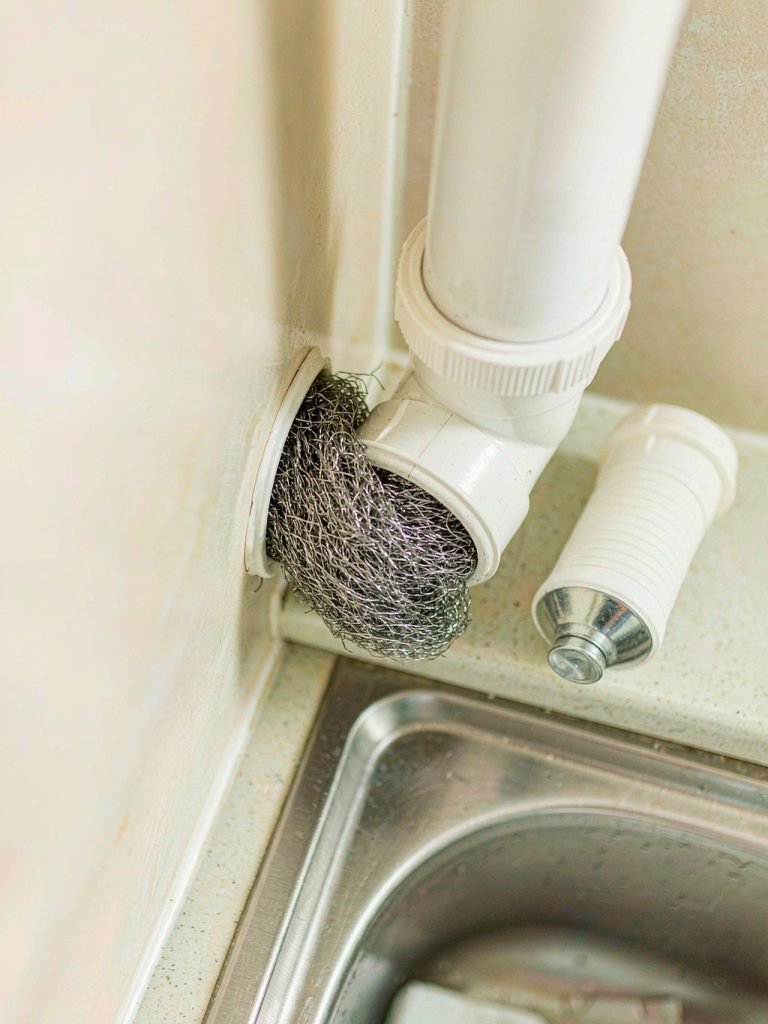
- Steel wool plus sealant. Pack the gap with coarse steel wool, then cover it with exterior-grade sealant. Mice chew through foam and plastic; they do not chew through steel wool.
- Door sweeps. A brush or rubber sweep on every exterior door, including the one to the garage.
- Vent covers. Replace torn insect mesh with 6 mm hardware cloth. Dryer vents are a common entry point because the flap stays open.
- Roof line. Rats follow power lines and tree branches. Trim branches back 1.5 m from the roof and fit a metal collar around the cable where it meets the wall.
Remove the three things they need
Food, water and shelter, in that order. Store pet food in metal bins, not bags on the floor. Fix dripping outdoor taps. Move firewood and compost away from the wall. Clear ivy and dense ground cover from the foundation; it is a highway with a roof.
Traps where the evidence is
Set snap traps along the wall, trigger plate against the wall, baited with peanut butter pressed into the plate. Place them where you have seen droppings or grease marks, and check them daily. Wear gloves and dispose of carcasses in a sealed bag.
If you must use bait, use a locked station anchored to the ground, and place it where children, pets and wildlife cannot reach it. Never use loose bait blocks in a shed or garage.
How to know it worked
Clean the run marks and droppings, then re-check the same spots after a week. No new droppings and no new gnaw marks means the pressure has stopped. New droppings means you sealed the wrong gap — and the next pass starts again at the foundation.